Accessibility Tools

Gedeptin® Technology Overview

GEDEPTIN® TECHNOLOGY OVERVIEW

Gedeptin is a novel patented technology for the treatment of solid tumors using a gene therapy strategy known as Gene-Directed Enzyme Prodrug Therapy (GDEPT). In September 2021, GeoVax entered into an assignment and license agreement with PNP Therapeutics, Inc. (PNP), granting GeoVax exclusive worldwide rights to develop and commercialize Gedeptin. The Gedeptin technology was developed with funding support from the National Cancer Institute (NCI), part of the NIH. GeoVax’s license to Gedeptin includes the rights to expand its use to all human diseases and/or conditions including, but not limited to, other solid tumors.

GeoVax has also entered into an exclusive worldwide license agreement with Emory University for intellectual property covering the use of Gedeptin in combination with Immune Checkpoint Inhibitors (ICIs). The licensed technology supports the combination of GDEPT-based tumor debulking with checkpoint blockade.

How Gedeptin Works

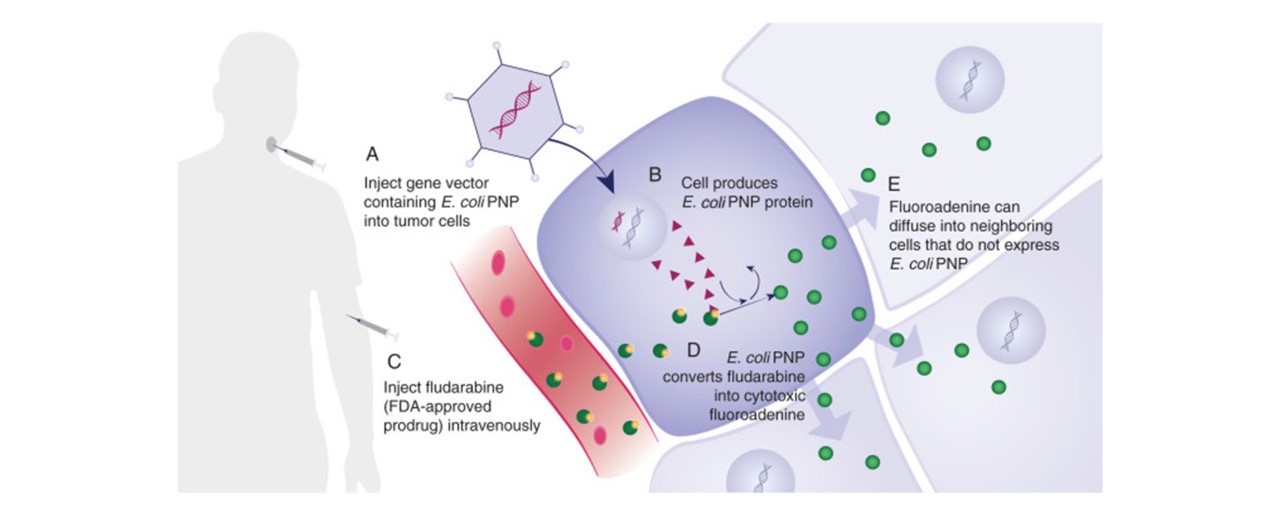
In GDEPT, a replication-deficient adenovirus vector is used to infect and transduce tumor cells with a nonhuman gene, which expresses an enzyme capable of converting an inactive prodrug into an active antitumor compound, in situ. A cycle of Gedeptin therapy consists of intra-tumoral injections of Gedeptin followed by administration of a prodrug, fludarabine phosphate, over a pre-defined time period. A Phase 1 dose ranging study, evaluating the safety of a single cycle of Gedeptin therapy, found the therapy to be well tolerated, with evidence of tumor size reduction in patients with solid tumors.

Tumor Injection → Local Tumor Destruction → Antigen Release → Immune Activation → Enhanced Checkpoint Inhibitor Response

240125 Gedeptin image white v2Phase I dose-escalating trial of Escherichia coli purine nucleoside phosphorylase and fludarabine gene therapy for advanced solid tumors - PMC (nih.gov)

Development Strategy

Gedeptin® is being developed as a novel immuno-oncology platform designed to enhance the effectiveness of immune checkpoint inhibitors and address a significant challenge in cancer treatment: tumors that fail to respond adequately to immunotherapy alone.

The therapy utilizes a Gene-Directed Enzyme Prodrug Therapy (GDEPT) approach, enabling the localized generation of a potent anti-cancer agent directly within the tumor. This targeted tumor destruction may not only reduce tumor burden but also increase the release of tumor antigens and other immune-stimulating signals within the tumor microenvironment.

GeoVax believes this mechanism may help convert immunologically "cold" tumors into more immune-responsive tumors, potentially improving recognition by the immune system and enhancing responses to checkpoint inhibitor therapies. As a result, Gedeptin is being evaluated as a potential immune-sensitization platform that could expand the effectiveness of immunotherapy across a range of solid tumor indications.

Recent preclinical findings further support this strategy, demonstrating evidence of systemic anti-tumor immune activation and enhanced sensitivity to checkpoint inhibition, reinforcing the potential role of Gedeptin within emerging combination immunotherapy approaches.

Next Phase of Development

GeoVax is advancing Gedeptin® into the next stage of clinical development through a planned Phase 2 study evaluating the therapy in combination with an immune checkpoint inhibitor for the treatment of resectable head and neck squamous cell carcinoma (HNSCC). The study is designed to assess Gedeptin’s ability to enhance anti-tumor immune responses prior to surgery, with endpoints expected to include major pathological response (MPR), immune activation biomarkers, and event-free survival.

The planned clinical strategy reflects the growing role of neoadjuvant immunotherapy in solid tumors and is intended to build upon the safety profile and anti-tumor activity observed in prior clinical studies. GeoVax believes this approach may provide a differentiated pathway for improving patient outcomes by combining localized tumor destruction with systemic immune activation.

The Company has initiated key planning activities supporting the Phase 2 program, including protocol development, manufacturing readiness, regulatory engagement, and clinical site selection.

Search